How Window & Door Companies Can Win More Jobs Without Competing on Price
Price matters. But making price the only reason to choose your business can quickly turn every quotation into a race to the bottom.
For window and door companies, the stronger opportunity is to make the whole buying experience feel clearer, more professional and easier to trust. When a customer understands what they are getting, can picture the finished result and receives a proposal that looks considered, the conversation is about value rather than simply who is cheapest.
That does not mean ignoring price. It means giving customers more reasons to choose your company. The most useful window and door sales tips are about making those reasons clearer, not simply cutting the price.
1. Make the First Response Feel Professional
A sales process starts before a quotation is created. It begins with how an enquiry is captured, how quickly it is picked up and how confidently the next step is explained.
If the customer has to chase, repeat information or wait while details are found in different places, the experience can feel disjointed. A more organised process helps the business look in control from the start.
For window and door companies, that professional impression matters because the customer is often considering a significant change to their home. The business is not only selling frames and glass. It is asking the customer to trust it with a visible part of a property they care about.
2. Show the Customer What They Are Buying
Asking a customer to imagine a colour, frame style or door on their own home leaves a lot open to interpretation.
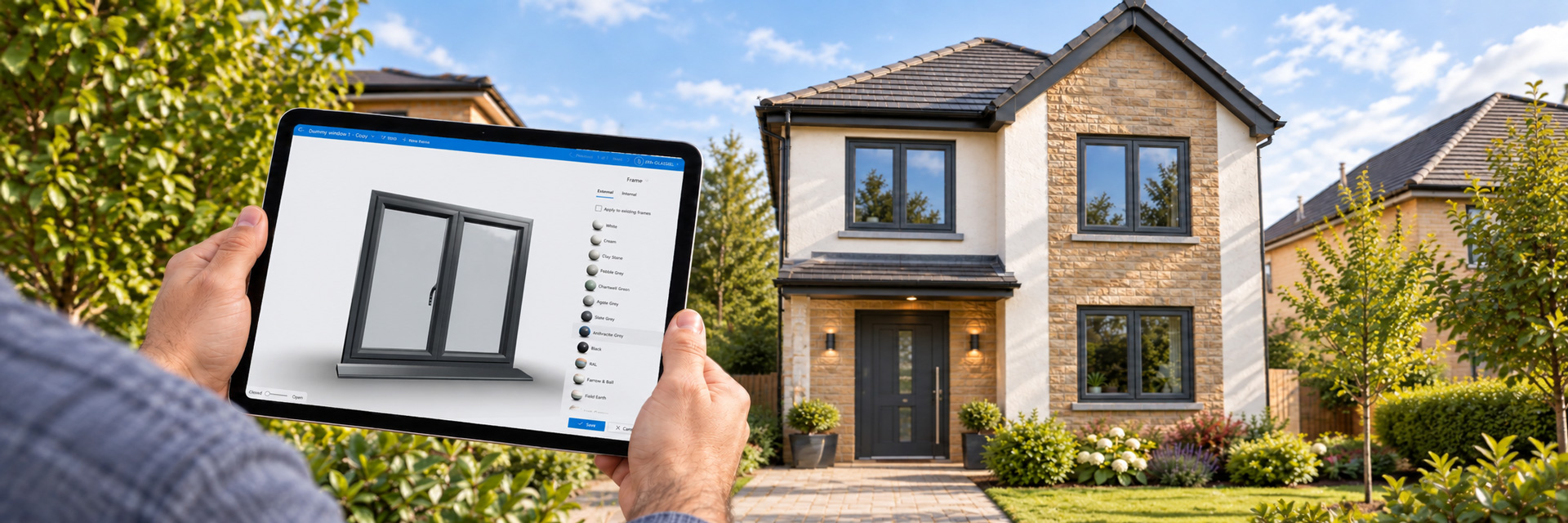
Clear drawings and realistic visualisation can make the conversation more concrete. Instead of explaining how a design might look, the salesperson can show different options and help the customer compare them in context.
That customer benefit should always connect back to the business outcome. Better visual clarity can support a more confident sales conversation, reduce uncertainty and help the salesperson present the job as a considered solution rather than a list of parts and prices.
WindowCAD window and door software, for example, can create realistic 3D designs and visualise frames on a customer's own home, giving sales teams a more visual way to present the proposed job.
3. Make the Quotation Part of the Sales Pitch
A quotation is more than a number at the bottom of a page. It is also part of how the company presents itself.
A clear, professional document can reinforce the quality of the conversation that came before it. Branding, product information, visuals and a consistent description of the job all help the customer understand exactly what is being proposed.
WindowCAD supports professional documents that can be customised with company branding and contact details. Where relevant, the wider document journey can include quotations, price requests, contracts and orders, rather than treating the quotation as an isolated step.
4. Give Customers Choice Without Creating Confusion
Choice can help sell a job, but too much choice presented badly can make the decision harder.
Window and door businesses may offer different frame styles, colours, finishes, materials and configurations. The sales skill is not simply showing everything. It is helping the customer compare the options that are relevant to their home and budget.
Visual tools are useful here because they turn abstract choices into something the customer can actually see. The conversation becomes less about colour codes and technical descriptions, and more about which option feels right for the property.
5. Keep the Momentum After the Customer Says Yes
Winning the sale is important, but the experience does not stop at acceptance.
The information agreed during the sales conversation needs to move into survey, ordering and, where relevant, manufacturing without becoming disconnected. If details are repeatedly copied between notes, emails and separate systems, there is more room for confusion.
A connected process helps the next person understand what has been agreed and where the job is heading. WindowCAD can track projects from enquiry towards order, pass projects from sales representatives to surveyors on relevant plans, and produce cutting lists and glazing sizes for manufacturing.
6. Help Sales Reps Sell Wherever the Conversation Happens
Window and door sales do not only happen at a desk. A rep may be sitting in a customer's home, working from a showroom, following up later from the office or continuing the conversation on another device.
The sales tools should support that movement. WindowCAD runs in a browser on phones, tablets and computers, and accounts can support unlimited users on unlimited devices. That gives businesses more flexibility to keep the same sales information available as the conversation moves.
7. Use Software to Support Selling, Not Just Administration
Software should not be valuable only because it replaces paperwork. For a sales-led business, the bigger question is whether it helps the team present better, communicate more clearly and move a customer towards a confident decision.
That is where industry-specific software can become part of the sales process rather than simply an office tool. Website designers can help generate enquiries, visualisation can support the conversation, pricing and professional documents can keep the proposal consistent, and project tools can carry information forward after the sale. If you are reviewing how the software fits into day-to-day selling, the WindowCAD quick start guide shows the basic project, frame and document workflow.
The goal is not to make technology the centre of the customer conversation. The goal is to give the salesperson better tools to sell the job.
Compete on Value, Not Only on Price
There will always be customers who choose the cheapest quote. But a window and door business does not have to build its entire sales strategy around being the lowest number on the page.
A professional first impression, a clear visual presentation, a well-structured proposal and a connected journey from enquiry towards order can all give the customer more reasons to choose the business.
WindowCAD is designed to support those stages for window and door companies. You can compare WindowCAD plans or try WindowCAD free for 7 days to see how it could fit into your own sales process.