Running a window and door business in 2026 means reading several signals at once. Construction data has softened, new orders have fallen sharply from the previous quarter, households remain cautious about discretionary spending, and new building standards are changing the technical landscape for new-build work.
None of those headlines tells an installer, supplier or fabricator exactly what will happen next. They do, however, point to a more demanding trading environment. When work is harder-won, the commercial cost of a missed enquiry, an unclear proposal, a pricing error, or a poor handover becomes more noticeable.
The useful question for businesses is therefore not only, “What will the market do?” It is, “What can we control?”
1. A Mixed Market Means Every Enquiry Matters More
Official figures released by the Office for National Statistics on 11 September 2026 estimated that construction output fell by 0.5% in the three months to July compared with the three months to April. New work fell by 0.4% and repair and maintenance by 0.7%, although output edged up by 0.1% in July itself.
Earlier ONS data for the second quarter showed total new construction orders fell by 11.8% compared with the first quarter. These are construction-wide figures, not a measure of fenestration alone, but they help describe the broader environment in which many window and door companies operate.
The Construction Products Association’s Summer Forecasts 2026 also forecast private housing output to fall by 10% this year and pointed to continued caution around home-improvement spending. That is an industry forecast rather than an official statistic, but the business implication is similar: companies cannot assume that every potential customer will be ready to spend quickly.
In that kind of market, conversion matters. Fast follow-up, clear information, professional presentation and an easy route from enquiry to decision become more valuable because replacing a lost opportunity may be harder than it was in a busier market.
2. Changing Standards Raise the Value of Accurate Information
The Future Homes and Buildings Standards were published in March 2026. The main regulatory changes are due to come into force in England on 24 March 2027, subject to transitional provisions, with separate timing applying to higher-risk building work. Approved Document L was also updated on 8 September 2026.
For the glazing sector, the Glass and Glazing Federation has highlighted the move towards assessing the actual size and configuration of individual windows in new-build applications rather than relying on a standard calculation window.
For businesses, the message is not that sales software can replace compliance work. It cannot. Certification, approved calculation methods and appropriate technical or regulatory advice remain essential. What becomes more important is the quality of the information surrounding the job: what has been designed, what the customer selected, what has been priced, and what ultimately needs to move forward.
3. What Window & Door Businesses Can Control in 2026
Make Each Enquiry Easier to Progress
When leads are valuable, businesses need a clear way to capture them, respond and keep the next action visible. That may mean improving website enquiries, tightening follow-up or reducing the number of places where customer information can disappear between teams.
Help Customers Understand What They Are Buying
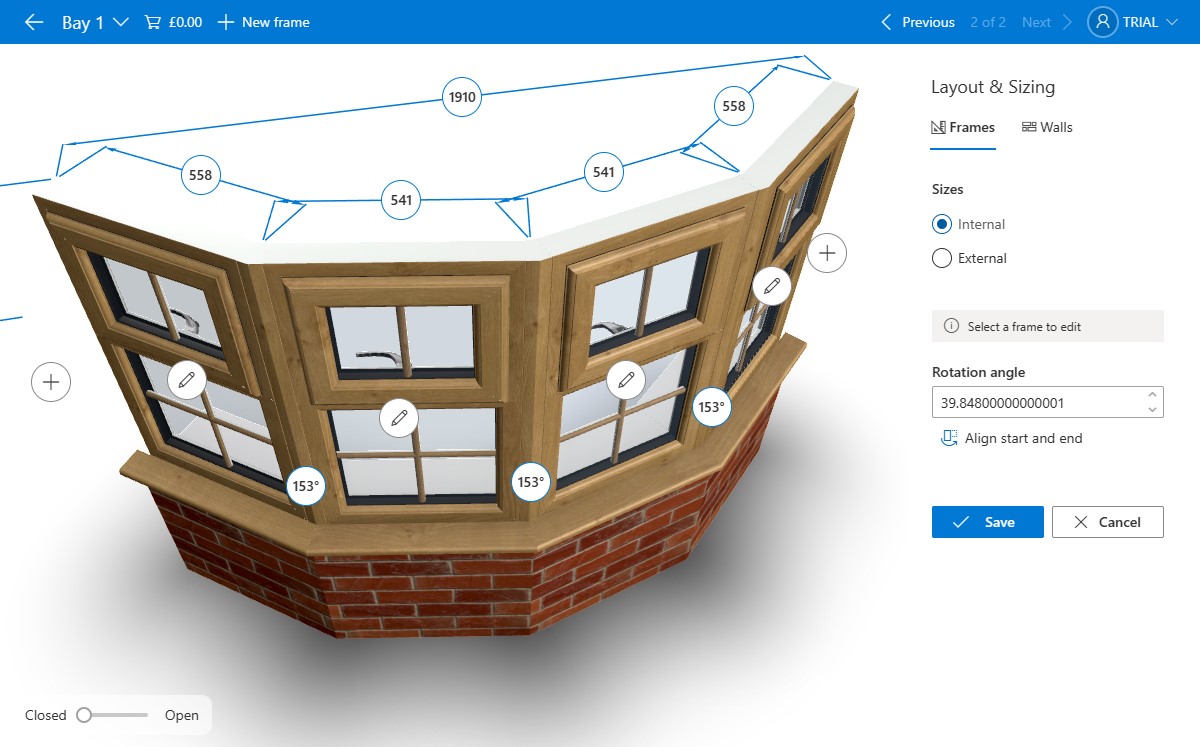
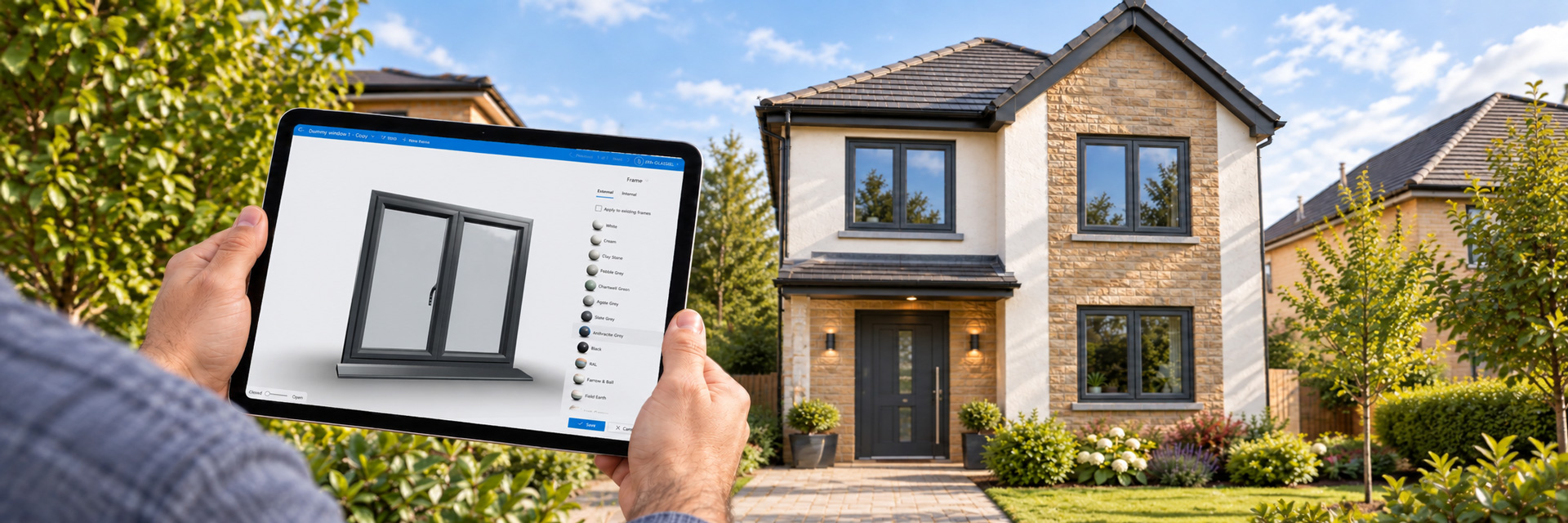
For homeowners, windows and doors are a significant purchase tied to the look and feel of their home. If they are cautious about spending, vague descriptions and flat swatches can make a decision harder. Clear drawings, realistic visualisation, product choices shown in context and well-presented paperwork can all help a customer understand the proposal before committing.
Keep Commercial Information Connected
Pricing pressure increases the importance of consistency. A design, specification, price and quotation should describe the same job. When information is repeatedly copied between spreadsheets, emails, notes and separate systems, the opportunity for avoidable errors grows.
Strengthen Handover After the Sale
A sale does not end the information journey. Surveyors, office teams, suppliers and manufacturing staff may all need the project later. Businesses that keep the customer’s choices and project details attached to the job provide the next person with a clearer starting point and reduce reliance on a single individual to remember what was agreed.
Use Digital Tools as Part of Selling, Not Just Administration
Modern customers may begin on a website, continue the conversation at home, and make decisions later. The systems behind the business need to support that movement. A useful digital process should help the company sell professionally wherever the conversation happens, rather than simply creating more admin.
4. Where Modern Industry Software Fits
Software is only one part of the answer, but it can remove friction from several of these areas at once. Modern industry-specific software, such as WindowCAD, can bring design, visualisation, pricing, documentation and project progression into a more connected process.
For a business evaluating any system, the better question is not which package has the longest feature list. It is whether the software helps people sell professionally, gives customers enough clarity to make decisions, keeps commercial information consistent and allows a job to move from enquiry towards order without unnecessary gaps.
That makes software a business decision rather than simply a design decision. The value is not the screen itself. It is what the business can do more clearly, consistently and professionally because the information is connected.
5. Preparing for a Less Forgiving Market
The 2026 news does not point to one simple outcome for every window and door company. Different regions, customer types and parts of the supply chain will experience the market differently.
What is clearer is that businesses have less reason to tolerate avoidable friction. They cannot control construction demand, household confidence, or the regulatory timetable. They can control how quickly they respond to an enquiry, how clearly they present a proposed job, how consistently they price it, and how well information travels from sales through survey and towards order.
Those basics matter in any year. In a market where opportunities may be harder to win, and technical expectations are rising, they matter even more.
About WindowCAD
WindowCAD develops window and door design, visualisation, quotation and project software for installers, suppliers and fabricators. More information: https://www.windowsoftware.co.uk/
Sources
External market and regulatory claims in this article are paraphrased from the sources below. Official statistics, forecasts and regulations can be revised or updated, so readers should verify the latest official guidance before making compliance or business decisions.
OFFICIAL STATISTICS: Office for National Statistics. GDP monthly estimate, UK: July 2026, construction sector. Released 11 September 2026. https://www.ons.gov.uk/economy/grossdomesticproductgdp/bulletins/gdpmonthlyestimateuk/july2026
OFFICIAL STATISTICS: Office for National Statistics. Construction output in Great Britain: June 2026, new orders and Construction Output Price Indices, April to June 2026. Released 13 August 2026. https://www.ons.gov.uk/businessindustryandtrade/constructionindustry/bulletins/constructionoutputingreatbritain/june2026newordersandconstructionoutputpriceindicesapriltojune2026
INDUSTRY FORECAST: Construction Products Association. CPA Releases Summer Forecasts 2026. July 2026. https://www.constructionproducts.org.uk/news-media-events/news/2026/july/cpa-releases-summer-forecasts-2026/
OFFICIAL REGULATORY SOURCE: UK Government, Ministry of Housing, Communities and Local Government. The Future Homes and Buildings Standards: Building Circular 01/2026. Published 24 March 2026. https://www.gov.uk/government/publications/the-future-homes-and-buildings-standards-building-circular-012026
OFFICIAL REGULATORY SOURCE: UK Government. Approved Document L: Energy and greenhouse gas emissions (2026). Published 24 March 2026, last updated 8 September 2026. https://www.gov.uk/government/publications/approved-document-l-2026
INDUSTRY TECHNICAL INTERPRETATION: Glass and Glazing Federation. Future Homes Standard delivers step-change for new build windows and doors. Published 26 March 2026. https://www.ggf.org.uk/future-homes-standard-delivers-step-change-for-new-build-windows-and-doors/